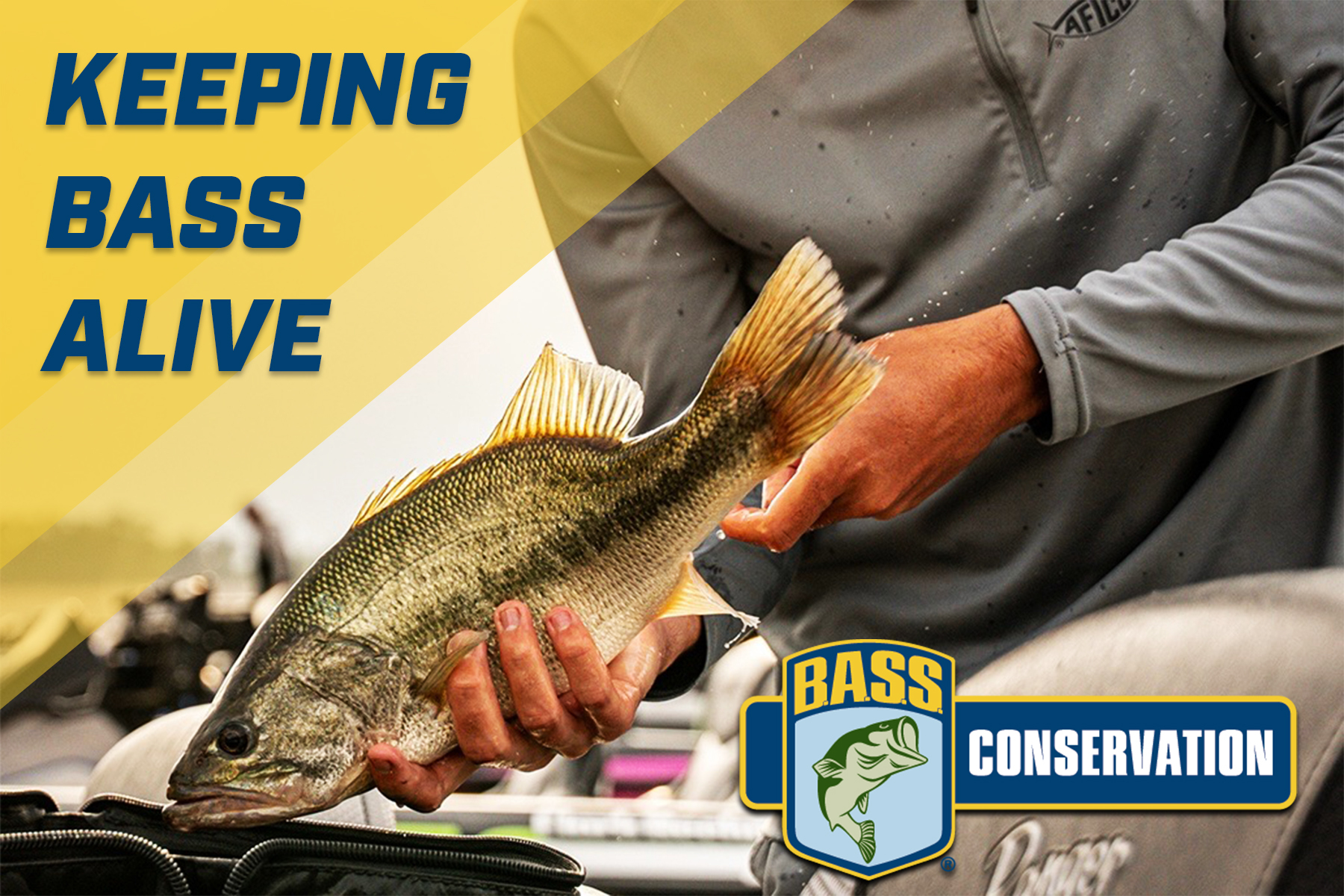
BIRMINGHAM, Ala. — For more than half a century, B.A.S.S. has helped lead the way in bass conservation, championing responsible fish care practices that have shaped the sport of competitive bass fishing. Now, the organization is reaffirming that commitment with the release of an updated edition of Keeping Bass Alive, a comprehensive guide to improving fish care and survival during bass tournaments.
Available free of charge on Bassmaster.com, the updated guide incorporates the latest scientific research and proven fish care techniques to help anglers and tournament organizers minimize stress on bass throughout the tournament process, from the moment a fish is caught until it is released back into the water.
First introduced more than two decades ago, Keeping Bass Alive has become an essential resource for the tournament fishing community, helping establish best practices that have been adopted by anglers, tournament directors and organizations across the country.
“Keeping Bass Alive has been the go-to resource on tournament fish care for over 20 years,” said Gene Gilliland, B.A.S.S. Conservation Director. “These updated recommendations represent the best scientifically proven practices to help anglers and tournament organizers maximize survival of bass released after tournament weigh-ins.”
The updated publication builds upon B.A.S.S.’s longstanding leadership in fisheries conservation. From pioneering catch-and-release practices in competitive fishing to advancing livewell management, fish handling and tournament release procedures, B.A.S.S. has consistently worked to ensure that protecting the resource remains a fundamental part of the sport.
As tournament fishing continues to evolve, so does the science behind keeping bass healthy. The latest edition reflects that evolution, providing practical, research-based guidance that anglers and tournament organizers can incorporate into their fish care routines.
While tournament procedures and equipment have changed dramatically over the years, B.A.S.S.’s conservation philosophy has remained constant: The future of bass fishing depends on the health of the resource.
“Every angler has an obligation to be a steward of the resource that the sport of bass fishing is based — the fish!” Gilliland said. “By following the best possible fish care practices, we can ensure that bass populations remain healthy and the sport can thrive for generations to come.”
By making the updated guide available at no cost, B.A.S.S. hopes to extend the reach of these recommendations well beyond its own tournaments, empowering fishing clubs, high school and college anglers, tournament organizations and recreational fishermen to adopt the highest standards of fish care.
The updated Keeping Bass Alive guide is available here. For more information on B.A.S.S. Conservation visit Bassmaster.com.